Hanka Borynowa
The PeasantsHanka Borynowa is Antek Boryna’s wife and the mother of his children, but her significance extends beyond the injuries of their marriage: when the men of Lipce are imprisoned and the fields lie idle, she takes up the work and authority left behind by Maciej Boryna and Antek. Her rise from timidity to confident leadership makes her a central figure in the novel’s account of women’s labor, household survival, and the possibility of solidarity in a village under pressure.
Identity and Household
Hanka’s life is rooted in the rhythms of a farming household and the work required to keep it going. In one encounter with the priest, she is identified as Anna, a young woman in a red headscarf whose hands are covered in soil. Unable to offer her hand directly, she grasps his through her apron and kisses it. The priest asks after the boy he baptized at harvest; Hanka answers that the child is well and already crawling. The brief exchange places her within the village’s religious and agricultural calendar while showing her as a mother attentive to her child and accustomed to labor in the fields.
The household’s vulnerability is part of a wider economy of seasonal pressure. As Lipce prepares for the fair on St Kordula’s Day, villagers debate which animals or crops to sell and how to meet winter needs, taxes, communal contributions, debts, and payments to servants. Even households with substantial land struggle to balance their obligations; poorer families face still sharper constraints. That economy gives Hanka’s later anxieties their material force: preserving livestock and getting through winter are not abstract concerns but matters of daily subsistence.
Poverty and Estrangement
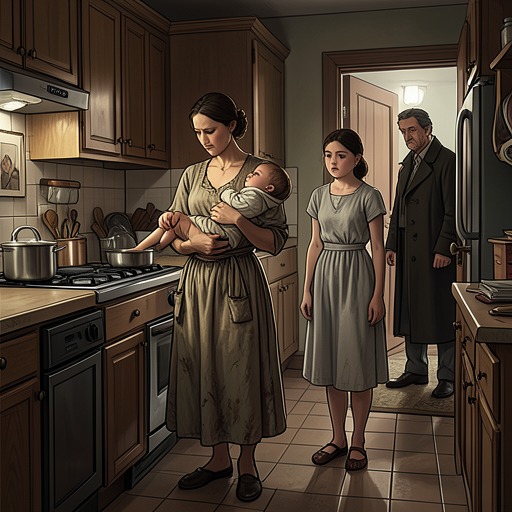
After Antek’s conflict with Maciej Boryna leaves Antek’s family expelled from the paternal homestead, Hanka’s household enters a period of acute deprivation. They live on potatoes and salt, have no money even for two groszy, and cannot obtain credit from Jankiel. Antek refuses to take work, spending days at home smoking and brooding or going out in restless pursuit of nothing. Hanka sees the likely consequence: they may have to sell the cow. She acknowledges that hired work would feel beneath Antek, but the household cannot afford to treat that pride as a solution. In her distress, she imagines that if she were a man she would work until her hands gave out to save the cow and carry the family through winter.
Poverty does not dissolve the couple’s conflict. Hanka goes about her usual tasks while Antek sits by the hearth, warming their older boy’s thin legs with his hand. Maciej peels potatoes nearby. The family’s silence is sharpened by resentment: Hanka and Antek avoid one another’s eyes, and their unspoken reproaches coexist with a stubborn refusal to yield. Three weeks after the expulsion, neither has forgotten the injury. The household must endure material hardship and the persistence of the family rupture at once.
A Change in Authority
The imprisonment of Lipce’s men and the resulting labor shortage mark a decisive change in Hanka. With the working men in jail, the fields are left fallow just as spring brings plowing, sowing, planting, and the care of calving cows, hatching fowl, and farrowing sows. Women must also manage gardens, livestock, firewood, children, and the many tasks that ordinarily depend on men’s labor. The work exceeds what they can comfortably accomplish, yet the season cannot wait. Hanka’s assumption of responsibility is therefore not a symbolic gesture detached from necessity: it answers a crisis in the household and in the village’s agricultural life.
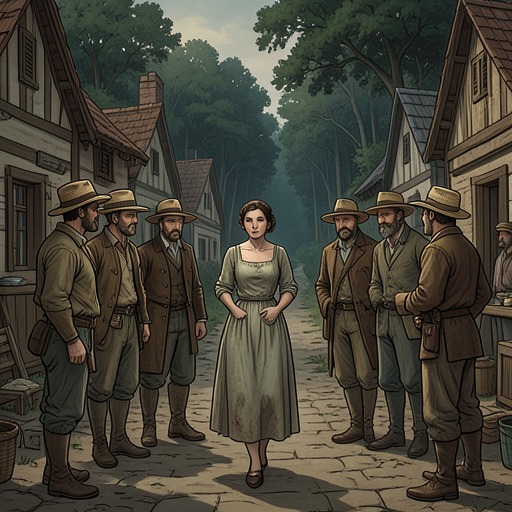
Her character changes with that responsibility. Once timid, she becomes physically stronger and more self-assured, able to confront Antek’s Brother-in-law when he seeks advantage from Maciej Boryna’s estate. Her speech is described as precise, clear, and direct. Jagustynka remarks, “You’ll be at war again!” Hanka answers calmly, “M’dear, warfare’s all I live by!” The exchange captures a new steadiness: confrontation, once something she might have shrunk from, has become part of the work of protecting the household.
The village notices the change. Women who once thought Hanka would scarcely speak up now acknowledge that she manages as well as a man. That judgment records both her increased standing and the gendered terms in which the community recognizes authority. The same period also opens a tentative space for a different relationship with Jagna. Although their conflict remains fundamental, there are moments when the two women feel pity for one another and might have spoken amicably. Their brief movement toward sympathy does not erase the past, but it suggests that shared vulnerability can loosen hostility.
Work, Mutual Aid, and Its Limits
Hanka’s transformation takes place amid a broader, uneven reorganization of village life. When neighboring villagers arrive to help with the spring work, the fields revive: carts and ploughs move out, voices and greetings carry across the land, and the first dark clods turn under the plough. Before sowing, people cross themselves and bend over the earth in a hush compared to a service in a vast church. The scene joins practical cooperation to the sacred meaning of labor and seed. It shows the community restoring cultivation together after the absence of its imprisoned men, though the evidence does not identify Hanka alone as directing that shared work.
The promise of mutual aid has strict limits. The poorest women, described as hired hands, receive no help. When they appeal to the priest, he tries to cheer them, then blocks his ears and leaves; Rocho offers only a promise to look for assistance elsewhere. Hanka’s growing authority therefore belongs to a real but incomplete change. Women take on work and responsibility, and the village sometimes shares its labor, but those with the least remain exposed to neglect.
Securing Antek’s Release
Hanka’s care for Antek is expressed through practical decisions as well as emotional endurance. When she learns that he may be released before his hearing if someone guarantees that he will not flee or provides a pledge of five hundred roubles, the amount becomes an urgent problem. Rocho cautions against rushing to sell land, warning that a man can leave on horseback and return crawling; they must ask around for a loan or find another way. Hanka has money Maciej gave her after Easter: Rocho counts four hundred and two roubles and five zlotys, still short of the required pledge. The sum is substantial, but the gap leaves the family weighing livestock against Antek’s freedom.
A court letter later confirms that a five-hundred-rouble pledge will secure Antek’s immediate release. Hanka is so overwhelmed that her voice disappears; she stands flushed, turns pale, and falls before the holy pictures with tears in her eyes. Once she can act, she tells Rocho to begin arranging a sale and to find whatever money is needed. She wants them to set out to see Antek on Tuesday, or even the next day. Her repeated, involuntary insistence that Antek is coming back turns the news into a plan.
When she later tells Maciej that Antek will return in three days, she explains that he has been taken to the gubernia and that Rocho has followed him with the money to pay the redemption. Maciej sits up briefly, rubs his eyes as if listening, then lies back beneath the quilt and appears to sleep again. Hanka’s announcement thus meets silence rather than a clear response from the old man, but her own course is set: she has found a way to pursue Antek’s return. Across these crises, she becomes the household’s most dependable manager, converting fear into work and limited resources into a determined attempt to preserve both family and farm.